

A COMPLETE AND COMPREHENSIVE HISTORY OF WHITE HORSE THEATRE
An intellectually refined account of a unique cultural institution
The history of White Horse Theatre is, in many ways, the history of a singular idea carried across borders, languages, and generations: the conviction that theatre—when performed with artistic sincerity and pedagogical intent—can become an instrument of profound linguistic and cultural transformation. What began modestly in 1978 has grown into one of the most influential educational theatre companies in Europe and beyond, reaching countless classrooms, shaping language education, and introducing young audiences to the living pulse of English drama.
I. Origins: A vision takes shape (1978–1980)

II. A turning point: Germany opens its doors (1980)
In 1980, White Horse Theatre received an unexpected invitation that would alter its trajectory: the British Army requested performances at its schools in the Federal Republic of Germany.
What began as a targeted tour quickly revealed a much larger demand. German teachers and students—many encountering native-speaker theatre for the first time—responded with overwhelming enthusiasm. They recognised in these performances a rare opportunity: English not as an abstract grammatical construct, but as a living, breathing medium of culture.
Schools across Germany began requesting tours; word of the company’s work spread rapidly. It became clear that White Horse Theatre had found fertile ground far from its original home.
III. A new home: relocation to North Rhine-Westphalia (1985)
By 1985, the growth of the company was such that Peter Griffith made a decisive commitment: he and his German wife Anna relocated permanently to Soest, North Rhine-Westphalia.
From this point onward, White Horse Theatre evolved into a professional touring organisation with a steadily growing ensemble of actors recruited primarily from the United Kingdom. Griffith increasingly moved away from performing himself, devoting his energy to a broader artistic and organisational role:
• writing new plays,
• directing productions,
• publishing books on educational theatre,
• and designing complex tour schedules reaching thousands of students each year.
Throughout the late 1980s and 1990s, White Horse Theatre became an indispensable part of English-language education in German schools. For many students, it provided their first encounter with Shakespeare, modern English theatre, or the experience of live performance itself.

A defining partnership: Michael Dray and the company’s artistic expansion (from 1989)
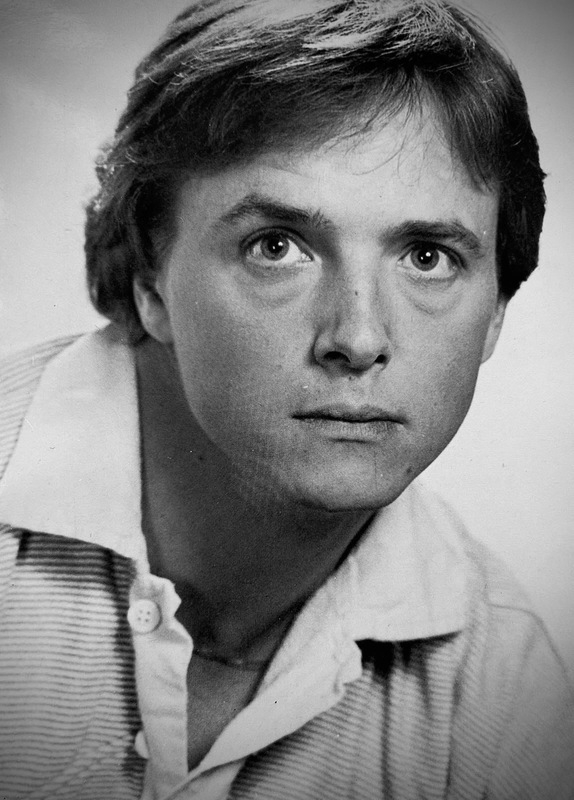
A decisive contribution to the artistic consolidation and structural growth of White Horse Theatre came through Michael Dray, who has been one of the company’s most influential figures since the late 1980s. Dray and Peter Griffith first met in 1984 as fellow actors on a major tour across the UK, The Netherlands, and Germany with Shakespeare’s Romeo & Juliet: Dray played Romeo, while Griffith played Benvolio and also composed and performed the production’s music on the lyre. Their professional collaboration developed into a long-standing personal friendship; in 1985, Dray travelled to Germany to attend Peter Griffith’s marriage to Anna.
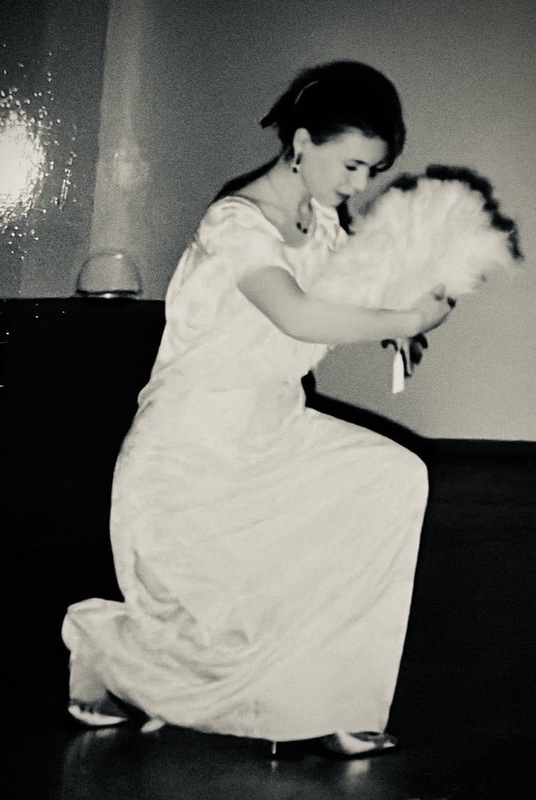
Dray’s affinity for educational theatre was rooted in his own professional formation. Trained as a theatre practitioner and also qualified as a teacher, he taught drama in English schools for several years—experience that later informed his precise and learner-focused approach to directing theatre for young audiences.
In 1989, as Griffith sought directors to support the company’s expanding touring work, he invited Dray to join White Horse Theatre as a director. Dray’s first production for WHT was Bernard Shaw’s Pygmalion, a cornerstone of the early repertoire that he has more recently directed again for the company. He also directed Future Perfect, written by Griffith for Mittelstufe audiences. At that time, touring productions were typically performed by three-actor ensembles over extended periods, with minimal technical support: beyond a stage manager, the team carried the full responsibility for delivering theatre in a demanding touring reality.
Following these productions, Griffith asked Dray to work alongside him as Associate and Touring Director. In this role, Dray collaborated closely with Griffith in developing and expanding the organisation. By the mid-1990s, the company’s touring model had evolved significantly: larger casts, professional design and creative support, and increasingly ambitious—often longer—tours became standard. In 1997, Dray joined White Horse Theatre on a full-time basis. Since then, he has remained a central pillar of the company Griffith’s closest collaborator, joint artistic director, trusted partner, and long-standing friend, whose contribution to building White Horse Theatre has been fundamental.
IV. Expansion across Europe and beyond

A theatre without borders
As its reputation grew, White Horse Theatre extended its reach well beyond Germany. Its productions began touring to international schools across Europe, where bilingual and multilingual environments made theatre an especially powerful linguistic catalyst. The company performed in countries including:
• France
• Belgium
• Luxembourg
• Switzerland
• The Netherlands
• Italy
• Spain
• and many more
Wherever it travelled, White Horse Theatre was welcomed as a bearer of language, culture, and dramatic imagination.
Global journeys
The company’s horizons broadened further as it embarked on major tours outside Europe—journeys that highlighted the universal appeal of its educational mission:
• China, where demand for high-quality English-language theatre was immense and performances regularly drew large audiences in cultural centres and international schools.
• Japan, where precision, discipline, and emotional subtlety resonated deeply with students and educators alike.
• Thailand, where the intersection of theatre and language education sparked vibrant cultural exchange.
• Sweden, where the ensemble found audiences attuned to progressive pedagogical approaches.
These tours underscored a simple truth: White Horse Theatre’s work transcended linguistic boundaries. Its plays communicated not only through words but through gesture, rhythm, humour, and human connection.
V. Artistic evolution and pedagogical impact
Over the decades, Peter Griffith developed more than 50 original plays, directed over 80 productions, and published influential works on theatrical pedagogy. His scripts—crafted with linguistic precision, dramatic clarity, and a keen awareness of student audiences—became integral to the theatre’s identity.
The company’s plays are marked by:
• lucid, learner-accessible English,
• dynamic storytelling,
• humour as a linguistic bridge,
• and emotional authenticity that resonates across cultures.
White Horse Theatre’s contributions also entered the formal educational canon. Text excerpts—including the play Honesty—were incorporated into the Cornelsen textbook series Access, and further passages from Griffith’s work have appeared in Klett schoolbooks, marking a rare recognition of contemporary theatre within major European educational publishing.
VI. Legacy and continuity
Today, White Horse Theatre stands as a testament to artistic perseverance and pedagogical innovation. Though rooted in Soest, its influence has travelled the world. Generations of students remember the moment when English ceased to be merely a subject and became a voice—a spoken, embodied experience facilitated by actors who understood the power of story.
Peter Griffith and Michael Drays remain as an artistic guiding spirit on an honorary basis to the company.
Thus, the history of White Horse Theatre is not a closed chapter but a living narrative—one that continues to unfold with every performance, every school visit, and every new young audience discovering the transformative energy of theatre. It remains a place where language and imagination meet, where education takes on dramatic form, and where—quite literally—stories come alive.